
How to Find Louisiana Court Records
Louisiana has no single free judiciary search that contains every trial case and document. The Louisiana Clerks' Remote Access Authority portal is the shared infrastructure for participating parish clerk indexes, remote images, e-recording, and e-filing. All district clerks participate institutionally, yet the date range, record series, image access, and price still vary by parish. A miss in that portal is not proof that no case exists. The official record remains with the clerk that received the filing.
Start with a party's full legal name, an approximate filing year, the case type, and the likely parish. A case number is stronger because Louisiana numbers often identify the court and filing sequence. Supreme Court matters can be searched through the Supreme Court of Louisiana, but that docket does not include ordinary parish trials. Older files may exist only on microfilm, paper, or a local index.
The official Louisiana judicial branch overview shows how state courts and local courts fit together. Its court directory is illustrated in the source image below.
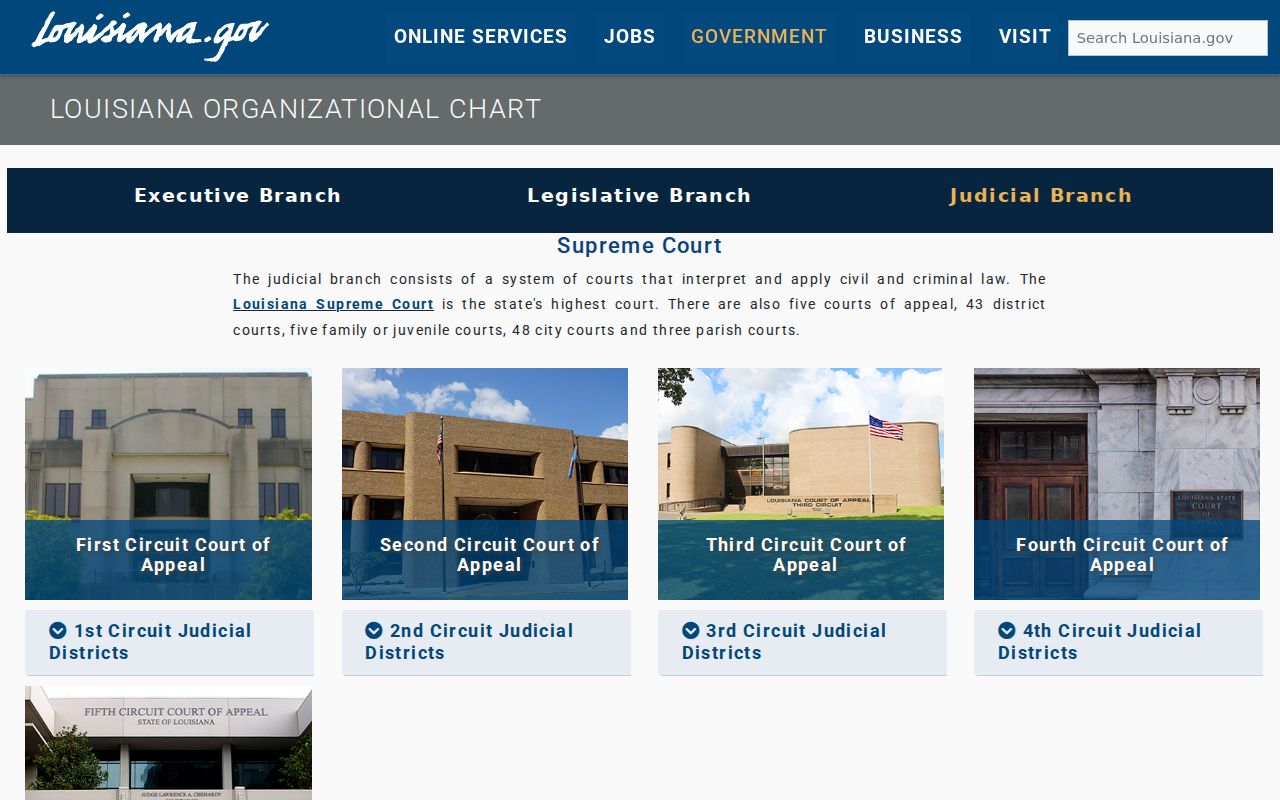
The source helps identify a court level before moving to the parish custodian.
- Identify the parish and court that likely received the case.
- Search the LCRAA portal or the appropriate parish clerk index by name or case number.
- Use the parish directory if coverage is missing, then check that clerk's local portal.
- Read the docket for filing dates, parties, events, and disposition before buying images.
- Order a certified copy from the legal custodian when proof with a seal is required.
Louisiana Court Records by Level
The Louisiana court system has four practical layers. The seven-justice Supreme Court is the court of last resort and supervises the state judiciary. Five circuit courts of appeal review most final district court judgments and hear supervisory writ requests. District Courts are the general trial courts for felonies, major civil suits, divorce, and succession matters. Limited courts include City, Parish, Justice of the Peace, Mayor's, Municipal, Traffic, Juvenile, and Family courts.
Louisiana's local geography is unusual. Several rural parishes may share judges within one numbered judicial district, yet each parish keeps its own clerk and docket. Orleans is also distinct, with separate Civil and Criminal District Courts plus Municipal and Traffic Courts. Venue therefore controls where records are held even when judges serve more than one parish.
Typical appeal path: Limited court or District Court › Louisiana Court of Appeal › Supreme Court of Louisiana.
| Court | Jurisdiction | Case Types |
|---|---|---|
| Supreme Court of Louisiana | Final state review and supervisory authority | Constitutional rulings, qualifying capital cases, appeals, and writs |
| Five Courts of Appeal | Intermediate appellate review | District court appeals and supervisory writs |
| District Courts | General trial jurisdiction | Felony, civil, family, divorce, and succession cases |
| Limited and special courts | Jurisdiction set by law | Traffic, misdemeanor, municipal, juvenile, family, and small civil matters |
The Louisiana State Bar's court structure reference provides a detailed public view of this hierarchy.
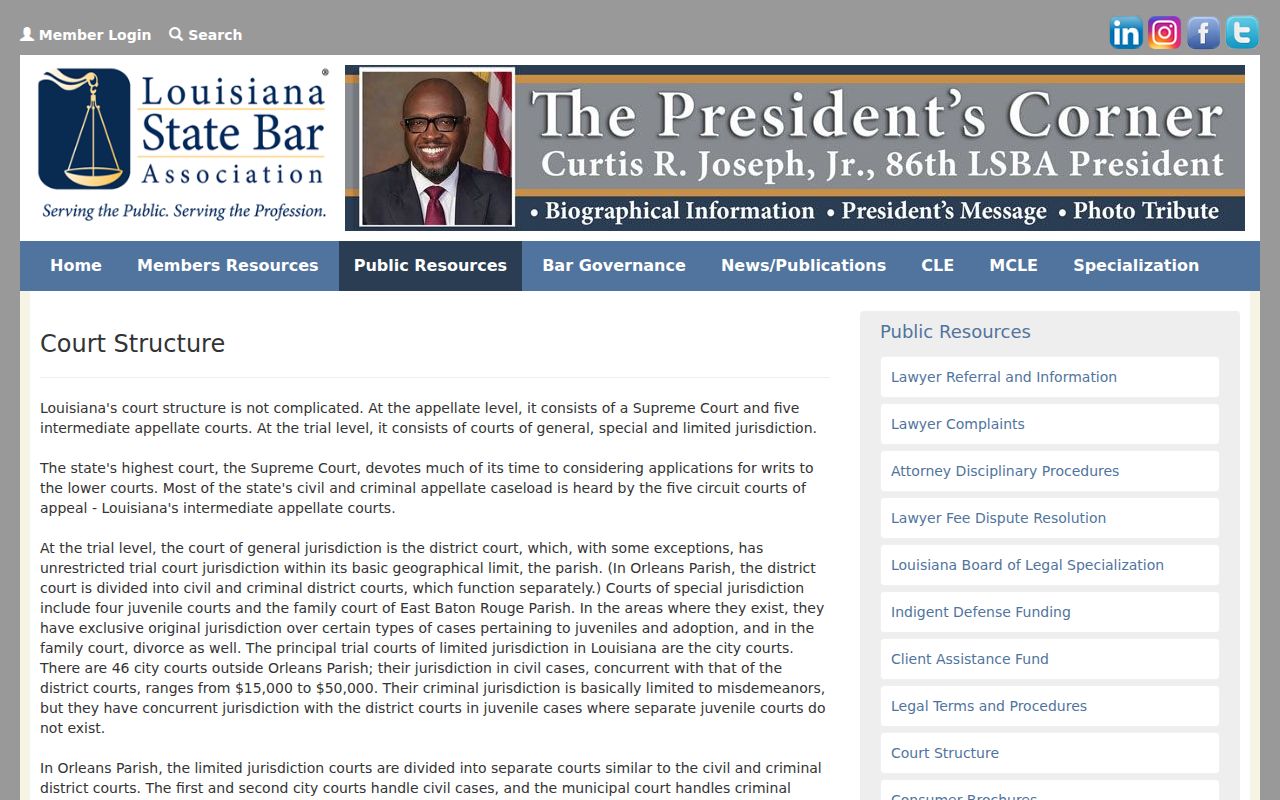
It is useful for checking jurisdiction before searching a clerk's index.
Louisiana Court Record Types
Louisiana court records reflect the court's jurisdiction and the remedy sought. District clerk files include civil petitions, answers, motions, exhibits accepted into the record, judgments, criminal charging papers, pleas, sentencing entries, divorce proceedings, and succession pleadings. Limited courts create their own traffic, misdemeanor, ordinance, eviction, and small civil records. Appeal courts and the Supreme Court maintain a separate record of briefs, writ applications, opinions, and rulings rather than replacing the trial file below.
- Criminal case files contain filed charges, hearings, pleas, motions, disposition, and sentence.
- Civil files identify plaintiffs, defendants, claims, service, rulings, judgments, and collection steps.
- Family records include divorce, custody, support, protective orders, and related judgments, subject to privacy limits.
- Succession records document Louisiana estate administration, testaments, heirs, inventories, and judgments of possession.
- Traffic records track a citation in court, while the separate OMV driving record tracks license history.
- Juvenile and mental-health files are commonly confidential or accessible only to authorized people.
Marriage licenses, inmate locations, driver histories, and criminal-history responses are related public records, but they are not all court case files. Their custodians differ. Choosing the correct record type prevents a clerk from having to reject or reroute a broad request.
What Louisiana Court Records Show
A Louisiana case index usually identifies the court, case number, caption, parties, attorneys, filing date, case category, and current status. The docket then lists each filed paper or court event by date. Some portals provide document images; others only supply an index. A docket entry is not always the document itself. Certified proof must come from the clerk, and a judgment should be read with any later amended judgment, appeal, or satisfaction entry.
- Case number
- The court's unique identifier, often the best search key.
- Filing date
- When the clerk opened or received the proceeding.
- Parties
- Plaintiffs, defendants, accused persons, petitioners, respondents, or heirs.
- Charges or cause
- The criminal counts or civil subject assigned to the case.
- Disposition
- How a claim or charge ended, such as dismissal, plea, verdict, or judgment.
- Sentence or judgment
- The court's ordered result, which may later be amended or appealed.
Caption means the formal case name. Disposition means the result of a charge or claim. Writ means a request for a higher court to exercise supervisory review. These labels help distinguish an initial filing from a final result.
Louisiana Statewide Record Systems
State systems answer different questions from a parish court file. The Louisiana Department of Public Safety and Corrections uses LA VINE for custody and community-supervision location. State Police operates restricted criminal-history services and the public sex-offender registry. The Office of Motor Vehicles sells an Official Driving Record. The Department of Health holds statewide birth and death records, but its marriage coverage is limited to Orleans Parish records retained for 50 years. None is a universal people-search database.
The DPS&C Locate a Person resource explains the state custody route.
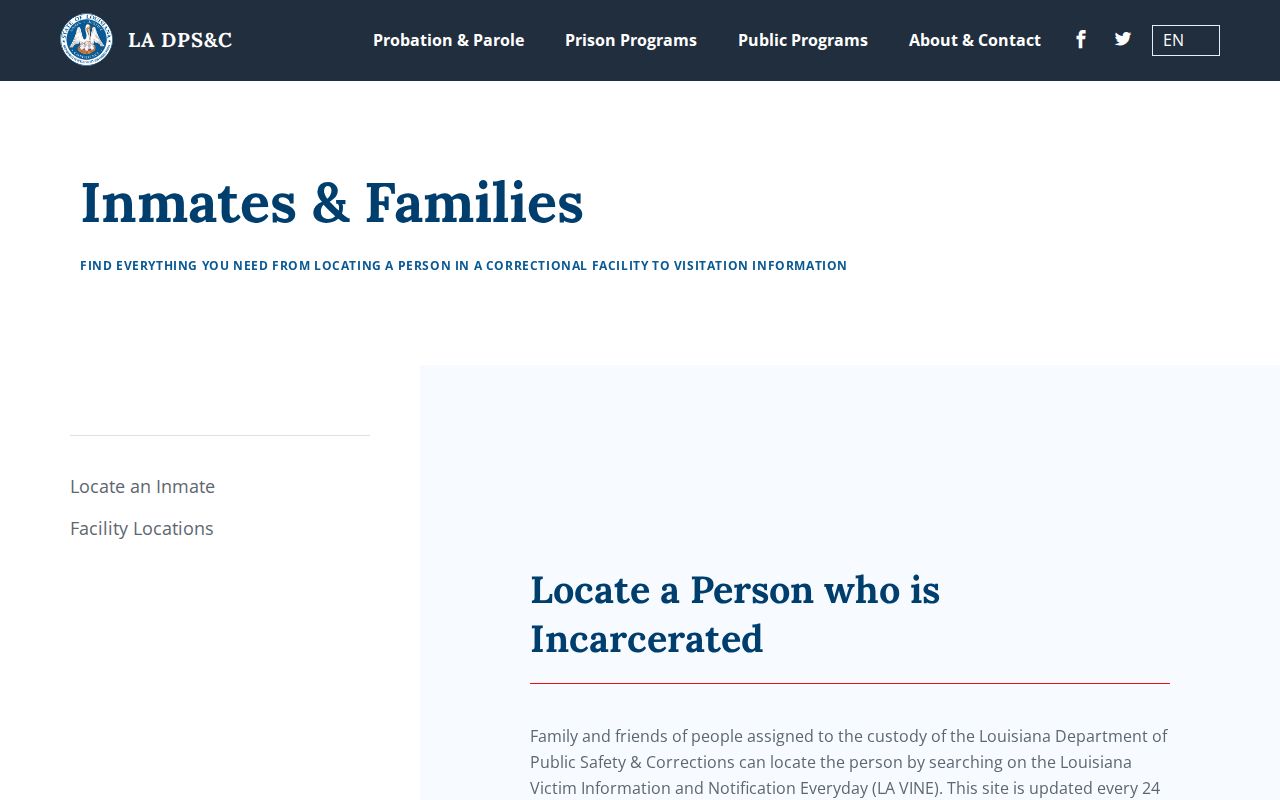
Parish jail rosters remain separate, so a full custody search may require both systems.
| System | What It Holds | Run By |
|---|---|---|
| LA VINE / Locate a Person | Custody, location, and some supervision status | Louisiana DPS&C and participating custodians |
| LSP criminal-history services | Louisiana history for recipients authorized by law | Louisiana State Police BCII |
| Official Driving Record | License and driving history, not court pleadings | Louisiana Office of Motor Vehicles |
| Center for Vital Records | Births, deaths, and recent Orleans marriage records | Louisiana Department of Health |
| Sex Offender Registry | Information Louisiana law permits for public registry profiles | Louisiana State Police |
The Louisiana vital-records service shows the state office's actual coverage.
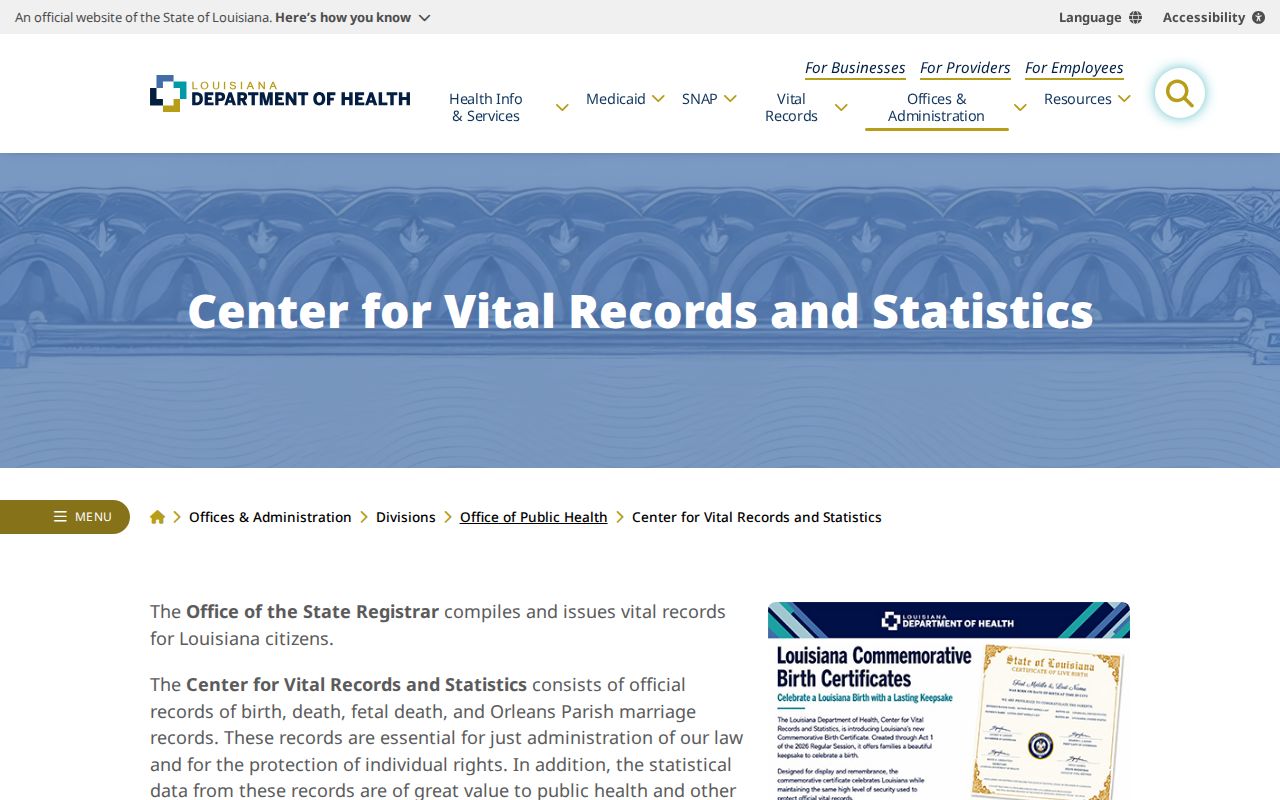
Original parish marriage licenses and all divorce decrees still route to the appropriate parish custodian.
Louisiana Court Records Access Law
Louisiana's Public Records Law begins with a broad right to inspect or copy records held by public bodies, while the judiciary also applies constitutional access principles, court rules, and laws that protect particular files. A requester should address the legal custodian, describe the record with reasonable detail, and state whether inspection, a plain copy, or a certified copy is needed. The Attorney General is an educational resource, not the custodian of a parish case.
The Legislature's automated expungement statute illustrates how court access can change when a qualifying record becomes confidential.
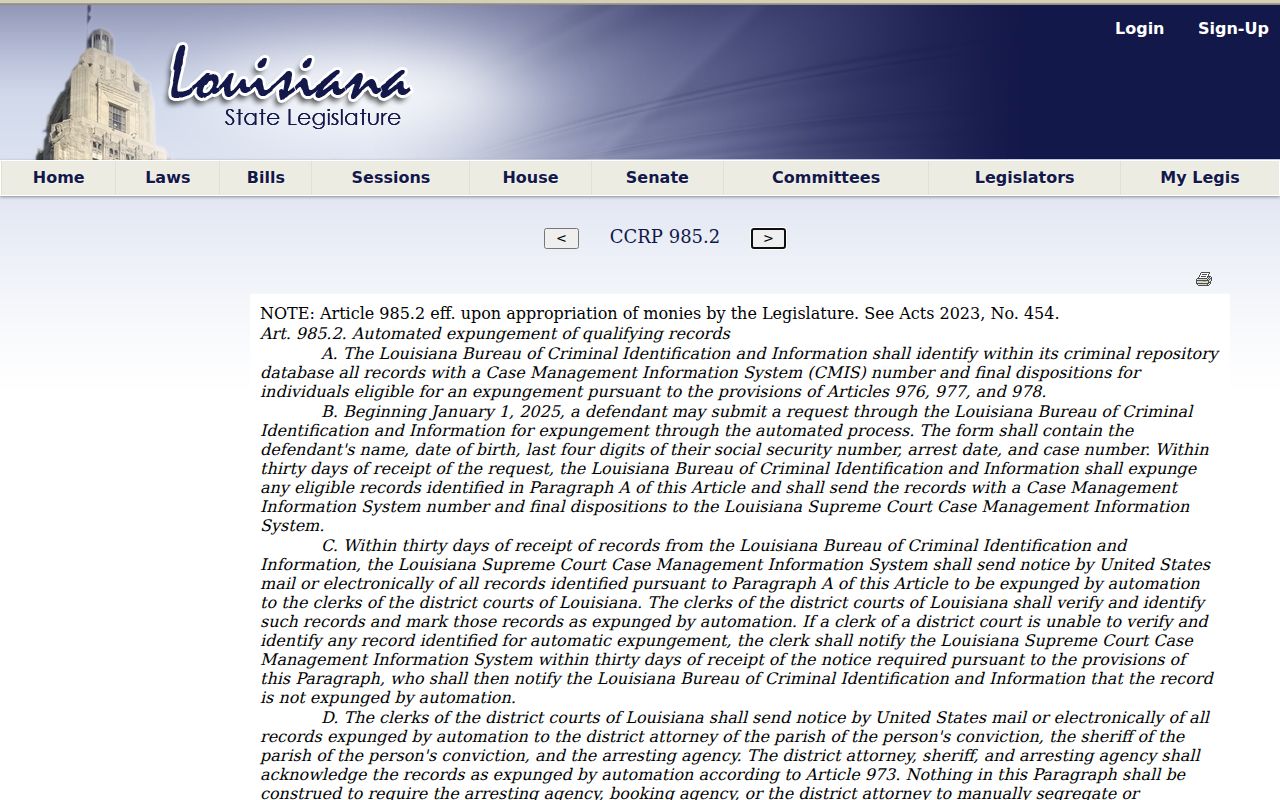
Statutory text matters because public access, redaction, and expungement depend on the type and status of a record.
Key Statutes:
Louisiana R.S. 44:1 defines public records, public bodies, and custodians.
Louisiana Revised Statutes Title 44 contains the Public Records Law and specific exemptions.
Code of Civil Procedure art. 253 governs filing, official electronic records, privacy omissions, and exceptions for originals.
Louisiana R.S. 13:754 establishes the clerks' shared remote-access and e-filing framework.
Public does not always mean free online access. Inspection may be available at the office while remote images require a subscription or transaction fee. The clerk can also require payment for copies and certification. Ask for an estimate when the request is broad.
Restricted Louisiana Court Records
Juvenile, adoption, mental-health, protected-address, and sealed materials may be closed or available only to the parties, counsel, agencies, or a person with a court order. Public documents should omit or redact Social Security numbers, full birth dates, financial account numbers, and protected information about minors. A portal can also display only an index when the underlying image is confidential. The absence of an image does not prove the whole case is sealed.
Louisiana criminal expungement is governed by Code of Criminal Procedure arts. 971 and following. Expungement makes qualifying records confidential from ordinary public access, but it does not destroy every record or prevent access by all authorized agencies. A motion is generally filed in the court that holds the arrest or case record. Eligibility, fees, notice, and agency processing depend on the disposition and statutory category.
The Legislature's automated expungement framework in art. 985.2 is funding-dependent. Current availability must be verified rather than assumed.
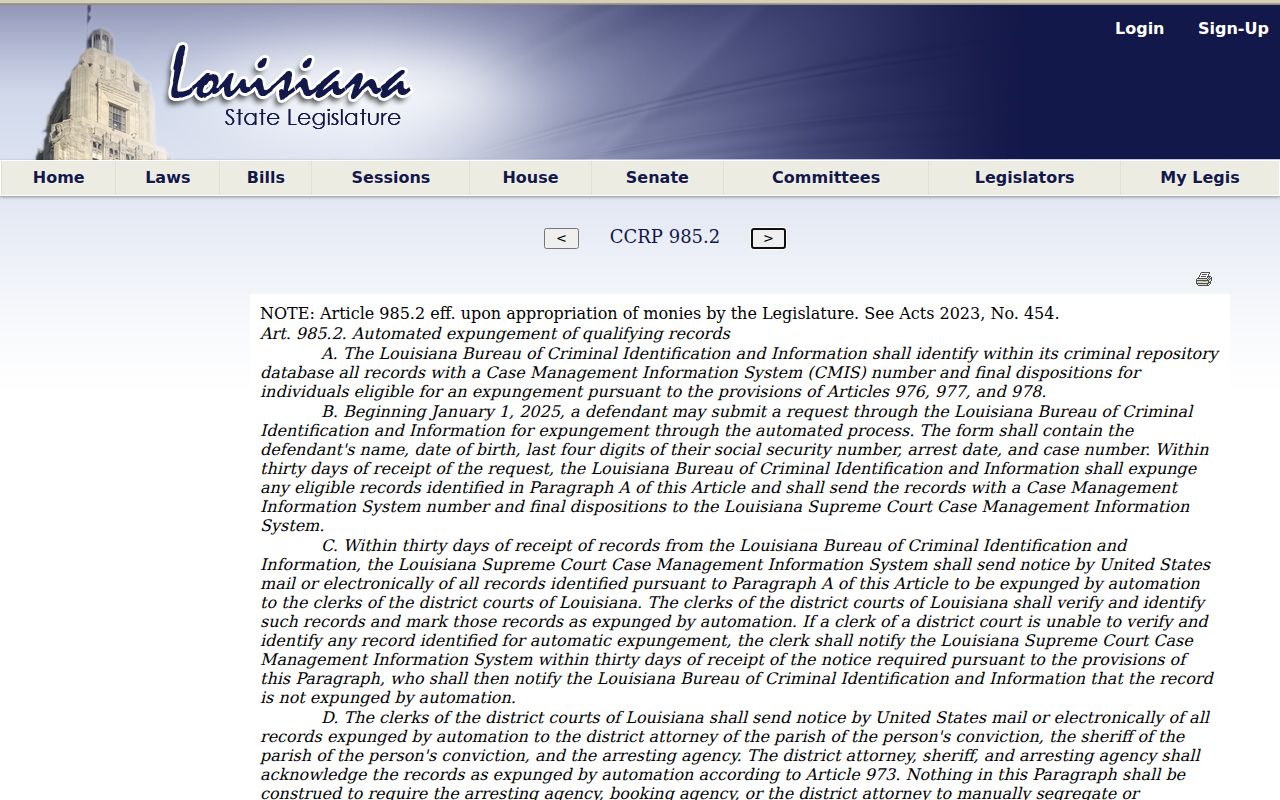
The clerk and each listed agency should confirm completion before a requester relies on a missing online result.
Find Louisiana Parish Court Records
Trial records remain tied to the parish where a case was filed. Louisiana's largest court systems also have local structures that make venue especially important. East Baton Rouge has the 19th Judicial District Court and specialized Family and Juvenile venues. Jefferson includes the 24th Judicial District Court, Parish Courts, Juvenile Court, and the Fifth Circuit domicile. Orleans has separate Civil and Criminal District Courts. Each of Louisiana's 64 parishes has its own records route.
East Baton Rouge Parish
Baton Rouge · Major capital-region court system
Jefferson Parish
Gretna · Large metro system with several court levels
Orleans Parish
New Orleans · Separate civil, criminal, traffic, and municipal courts
St. Tammany Parish
Covington · Northshore parish in the 22nd Judicial District
Lafayette Parish
Lafayette · Acadiana center in the 15th Judicial District
Caddo Parish
Shreveport · First Judicial District and separate Juvenile Court
Browse the full directory of all 64 Louisiana parishes to open the local court records resource for any parish.
The state's Local Louisiana directory also routes residents to parish and municipal government.
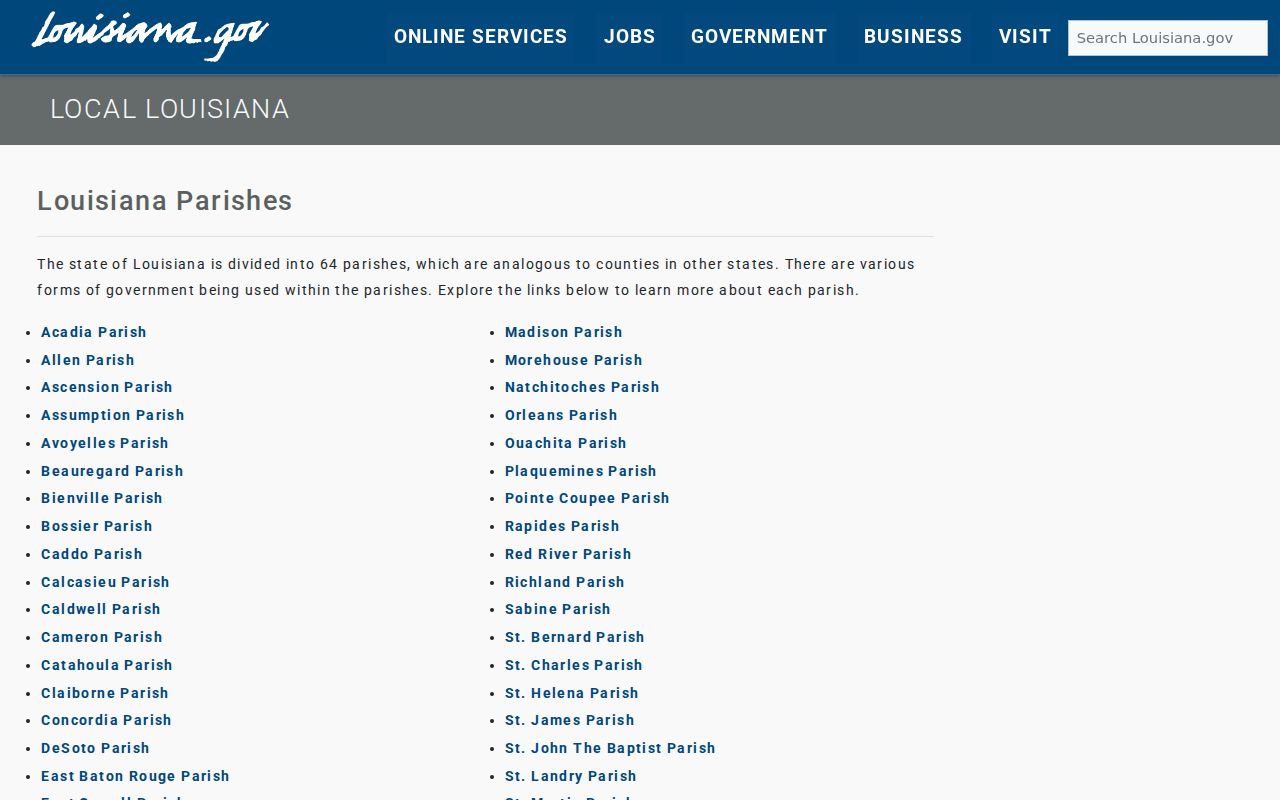
Use the parish spelling and folder route shown above when local offices share similar names.
Louisiana Court Records Fees
Louisiana law sets some clerk fee components and maximum line items, but it does not create one statewide price for every search, filing, or certified record. Parish totals may include service, court reporter, judicial expense, technology, recordation, archive, postage, or card charges. Remote LCRAA images may also use subscription or transaction pricing. Ask the custodian to separate search, page, certification, and delivery costs before placing a large order.
| Item | Amount |
|---|---|
| District clerk civil initialization component | Up to $20 |
| Filed document, first page | Up to $6 |
| Filed document, later pages | Up to $4 each |
| Ordinary-size exhibit page | Up to $2 |
| LSP online state background check | $31 for authorized users |
| Criminal expungement | Ordinarily capped at $550, with exemptions |
R.S. 13:841 permits clerks to charge less than stated maxima. A certified copy can include both page and certification charges. Succession, divorce, and civil filing costs require a parish advance-cost quote rather than adding selected statutory components. People who qualify may seek in forma pauperis status through an affidavit and court order, but fee relief is not automatic and does not apply to every agency service.
Read Louisiana Court Records Carefully
A filed criminal charge is an accusation, not a conviction. A docket may later show amendment, dismissal, acquittal, guilty plea, or verdict. Likewise, a civil petition states one party's claims; it is not a judicial finding. Read through the final judgment and any appeal. In a succession, an application or inventory is not the same as a judgment of possession that places heirs into ownership.
Status terms can also mislead. "Closed" may describe administrative case status without explaining who prevailed. "Nolle prosequi" means the prosecutor declined or discontinued a charge at that stage. "Writ denied" does not necessarily endorse every part of the lower ruling. A minute entry summarizes court action, while a signed judgment or order carries the operative text. When a legal result matters, obtain the signed instrument and certification from the clerk.
Record-reading rule: Match the person, parish, case number, filing date, and full disposition before treating a Louisiana search result as the intended case.
Louisiana Record Accuracy Limits
Online records can lag behind the clerk's official file. A newly filed pleading may not yet be indexed, a scanned image may follow its docket entry, and an agency may wait for court disposition data. Name searches also create false matches when common names, initials, or birth data overlap. Historical depth differs by parish because older paper and microfilm collections have not all been converted into the same remote system.
Corrections must go to the source. Contact the parish clerk for a docket or image problem, State Police BCII for a criminal-history repository issue, DPS&C or the reporting jail for custody data, OMV for a driving record, and LDH for a vital record it actually holds. Keep a copy of the disputed result and identify the precise field believed to be wrong.
Note: Confirm material facts with the Louisiana parish clerk that holds the official file before relying on a remote index or image.
Louisiana Court Records History
Louisiana's legal language reflects French and Spanish civil-law traditions, especially in private law. Estates are called successions. Wills are testaments. Adult protective proceedings use interdiction and curatorship. These terms are not decorative labels; they affect the index category a researcher should select. Searching only for generic "probate" may miss a succession record stored under Louisiana terminology.
The Constitution of 1974 supplies the modern judicial framework. Five appeal circuits developed with domiciles in Baton Rouge, Shreveport, Lake Charles, New Orleans, and Gretna. Parish clerks combine court-record custody with conveyance, mortgage, marriage-license, and election duties in most of the state. Orleans remains the main exception because its civil and criminal district functions are divided between separate courts and clerks.
The Supreme Court of Louisiana publishes rules, opinions, directories, reports, and court administration material.
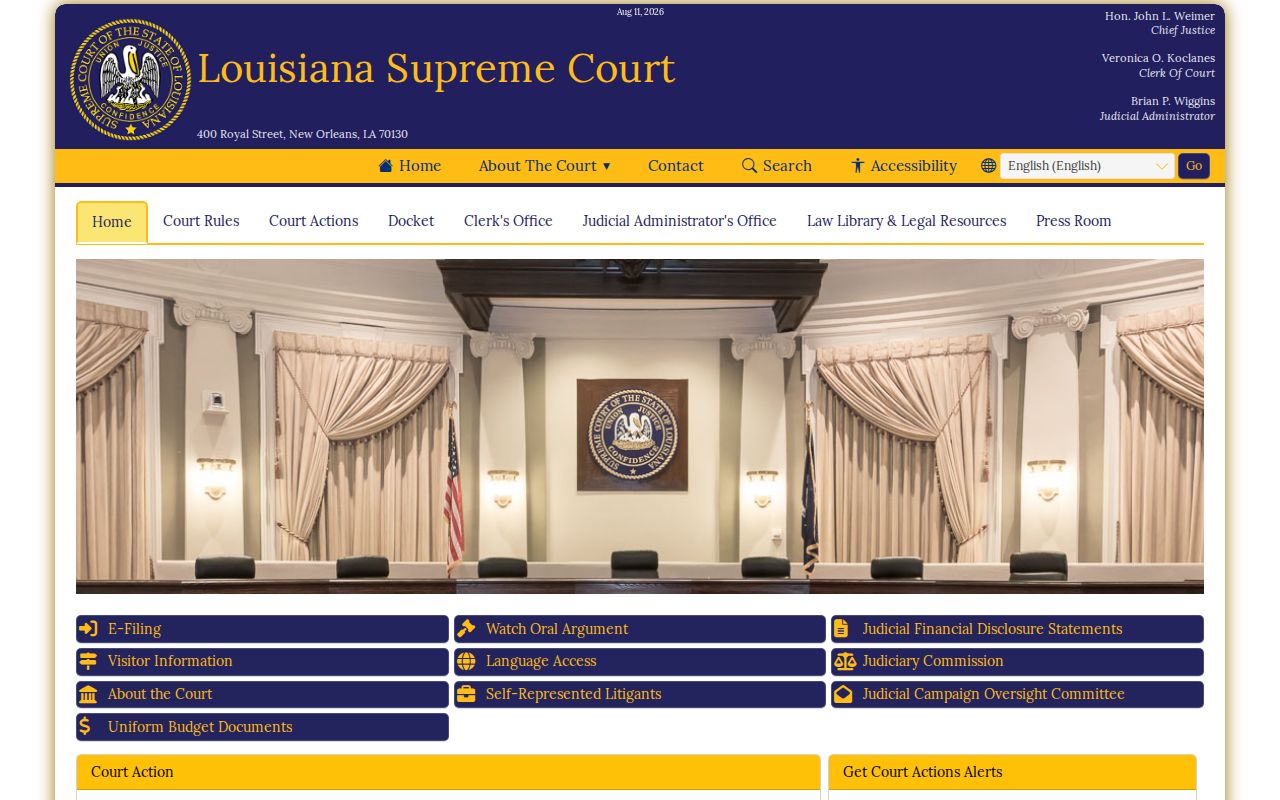
Its public resources document the statewide layer, while parish clerks retain the original trial records.
Louisiana Digital Court Records
Louisiana has expanded shared infrastructure without replacing local legal custody. R.S. 13:754 required every district clerk to facilitate electronic filing, recording, and remote access through the LCRAA universal interface by January 1, 2026. Code of Civil Procedure art. 253 recognizes accepted electronic filings and official electronic records while preserving exceptions for original wills, authentic instruments, notes, and certain evidence.
The change does not promise free access to every historic image. Parish coverage, product depth, subscription terms, and transaction charges still differ. The judiciary's Case Management Information System receives lower-court data for reporting and justice-system exchange, but CMIS is not an unrestricted public name-search site. A digital statewide layer and a parish-certified record serve different purposes.
Recent automated-expungement provisions also depend on funding and agency exchanges. Verify whether a program is operating for the record and date at issue. The safest method remains a layered search: shared portal, parish index, direct clerk request, then the separate state agency when the requested record is custody, criminal history, driving history, or vital records.
Louisiana Court Records Questions
Is there one free statewide court search?
No. LCRAA provides shared infrastructure, but record types, dates, images, subscriptions, and charges vary by parish. Supreme Court search covers Supreme Court matters. Trial searches still depend on the filing parish and local clerk.
Where is a certified Louisiana record ordered?
Order from the legal custodian. For a trial case, that is generally the parish clerk where it was filed. State agencies certify only the records within their own programs. A remote screenshot or index printout is not a clerk-certified copy.
Why is a case missing online?
The search may use the wrong parish, court, spelling, or date range. The record may predate online coverage, have no public image, be confidential, or still await indexing. Contact the clerk with names, approximate year, case type, and any known number.
Are Louisiana arrest records convictions?
No. An arrest records an allegation and custody event. Filed charges can change or be dismissed. Read the full court disposition before describing an outcome, and use State Police criminal-history services only when law authorizes the request.
Does LDH issue every marriage and divorce record?
No. LDH holds recent Orleans Parish marriage records within its retention window. Other original marriage licenses and all divorce decrees route to the appropriate parish clerk.
Are Louisiana succession records public?
Many filed succession pleadings and judgments are public, subject to redaction and sealing rules. Search the District Court clerk in the parish where venue was proper. Original testaments may require special handling.