
Active Warrants in Louisiana
A Louisiana judge or magistrate may issue an arrest or search warrant after reviewing sworn facts and finding the required legal basis. Courts also issue bench warrants, attachments, and capias orders when a person misses court or violates an obligation. Sheriffs execute and maintain local warrant information, while the issuing clerk's docket records case events, issuance, recall, or quash. These sources serve different roles.
Louisiana has no official public portal that reliably searches all arrest, bench, traffic, juvenile, fugitive, support, and search warrants in all 64 parishes. Restricted law-enforcement networks are broader, but they are not open public search systems. Use the Louisiana parish directory to reach the relevant sheriff and every possible court. Absence from a public list is not legal clearance.
Louisiana Warrant Types
The word "warrant" covers several commands with different purposes. The underlying court record and exact order should control the description.
- Arrest warrant: authorizes arrest after a judge finds probable cause based on sworn facts.
- Bench warrant or attachment: orders arrest or appearance after a missed setting, contempt, violation, or other noncompliance.
- Search warrant: authorizes a described search or seizure and may remain sealed before execution.
- Fugitive warrant: holds or returns a person wanted by another jurisdiction.
- Capias or civil attachment: commands custody or appearance and can arise from court, support, or contempt proceedings.
A civil or family support attachment is not a new criminal conviction. Likewise, a search warrant is not a name-based wanted record. Note: A bench warrant enforces a court obligation, while a search warrant authorizes a search of the place or property described.
Search Louisiana Warrant Records
Build a venue list before searching. Include each parish and city where the person was arrested, cited, lived, or had court duties. Gather the legal name, aliases, date of birth if lawfully available, citation or case number, and court named on any notice. Search the official sheriff's warrant or most-wanted page, but treat a selected list as incomplete.
- Open the parish directory and select every parish tied to the event or court obligation.
- Search that sheriff's official warrant page, most-wanted list, or official app if available.
- Search the district docket for warrant, attachment, FTA, capias, recall, quash, and bond entries.
- Call the exact lower or special court when a traffic, city, parish, mayor's, family, juvenile, or justice matter is possible.
- Confirm identity, case number, issuing court, current status, and recall date directly with the clerk, sheriff, or counsel.
If online sources are silent, a narrow public-record request may seek releasable warrant-register information. Active investigations, sealed warrants, juvenile cases, safety-sensitive facts, and unexecuted search-warrant details may be withheld. An attorney can inspect the case, seek a setting or recall, and arrange a response without treating a public list as conclusive.
Louisiana Warrant Search Fields
Parish interfaces vary. Some offer name searching, while others publish a list or require a phone inquiry. Typical official sheriff search controls include the following fields.
| Field Label | Type | Required | Notes |
|---|---|---|---|
| Last Name | Text | Usually | Exact or partial matching varies. |
| First Name | Text | Optional | Narrows a common surname. |
| Date of Birth | Date or text | Optional | May be used but not fully displayed. |
| Warrant Number | Text | Optional | Uses the issuing agency identifier. |
| Parish or Agency | Fixed or dropdown | Implicit | Most systems cover one parish. |
What Louisiana Warrant Records Show
A public result may be a short roster, a selected most-wanted profile, or a court docket event. Not every parish publishes the same fields. A photograph or last-known place is identification aid, not proof that the person remains wanted today.
| Field | What It Shows |
|---|---|
| Identity | Name, photograph, partial birth information, and physical traits if published. |
| Warrant | Number, issue date, alleged charge, agency, and warrant type. |
| Court | Issuing court, parish, case number, division, and missed setting where shown. |
| Bond | Amount and type at publication; a judge may later change it. |
| Status | Active, recalled, quashed, served, or later appearance when the system reports it. |
| Safety and contact | Caution flag, last-known location, and official verification or tip channel. |
The Louisiana State Police registry page is a separate official public system and must not be mistaken for a statewide warrant database.
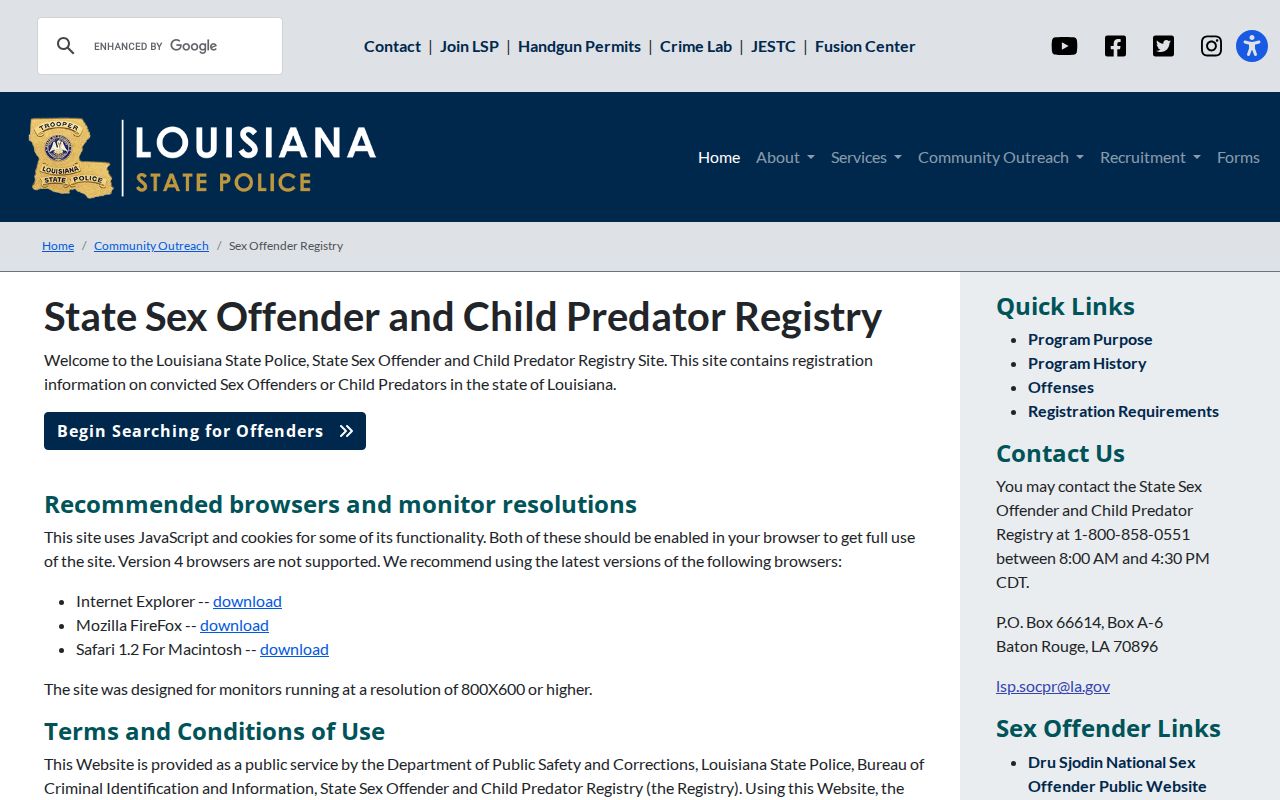
A registry entry documents registration information under its own law, not the current existence of an arrest or bench warrant.
Parish Warrants Across Louisiana
A shared judicial district does not merge parish files. A warrant issued in one parish remains tied to that parish clerk and sheriff even when judges also serve neighboring parishes. Court calendars may sit on a district site while documents remain parish controlled. Venue can also transfer, and the old docket may point to a new number in the destination court.
Traffic bench warrants deserve special care. They may be held by a city, parish, municipal, traffic, mayor's, or justice court and never appear in the district clerk's search. Call the court printed on the citation. Ask whether staff confirm status by phone, what identity facts are required, and whether a recall has reached law-enforcement systems. Office policy varies for safety and identity reasons.
Resolve a Louisiana Warrant
Do not rely on a web result alone or arrive unexpectedly without understanding arrest risk. Confirm the person's identity, warrant and case numbers, alleged charge, issuing court, and active status with the clerk, sheriff, or a Louisiana lawyer. For a failure-to-appear warrant, identify the missed duty and next setting. Counsel may ask the court to recall or quash the warrant, but only the judge or court can do so.
Ask whether lawful surrender must occur at the jail or court, whether remote payment is enough, and what bond applies. Paying a private website does not recall a warrant. If surrender is required, plan transportation, medication details, child and work duties, counsel, and lawful bond resources. No-bond warrants require judicial review. After a recall, obtain the signed order or clerk confirmation and verify that agency systems were updated. The underlying case still must be resolved.
Important: Speak with a licensed Louisiana attorney before surrendering or responding when arrest, bond, or safety risks are unclear.
Louisiana Most-Wanted and Tips
Sheriffs and State Police may publish selected most-wanted profiles, and local Crime Stoppers programs may accept tips. These lists prioritize chosen cases and are not complete warrant indexes. Use only the tip method linked by the official agency. Never submit a tip about yourself or approach a listed person. Call emergency services if there is an immediate threat.
The same State Police program page illustrates how Louisiana separates official public-search programs by legal purpose.
Searchers should not infer warrant status from another public safety database, even when State Police operates that database.
Restricted Louisiana Warrant Records
Juvenile warrants, sealed matters, domestic-safety facts, active investigative information, expunged records, and unexecuted search-warrant details may be hidden. Federal warrants belong to federal courts and agencies, not parish clerks. Law-enforcement networks such as NCIC are restricted. Public Records Law does not compel disclosure of every safety-sensitive field.
Louisiana R.S. 9:2603.1 validates electronic warrant applications, affidavits, records, and signatures with security requirements.
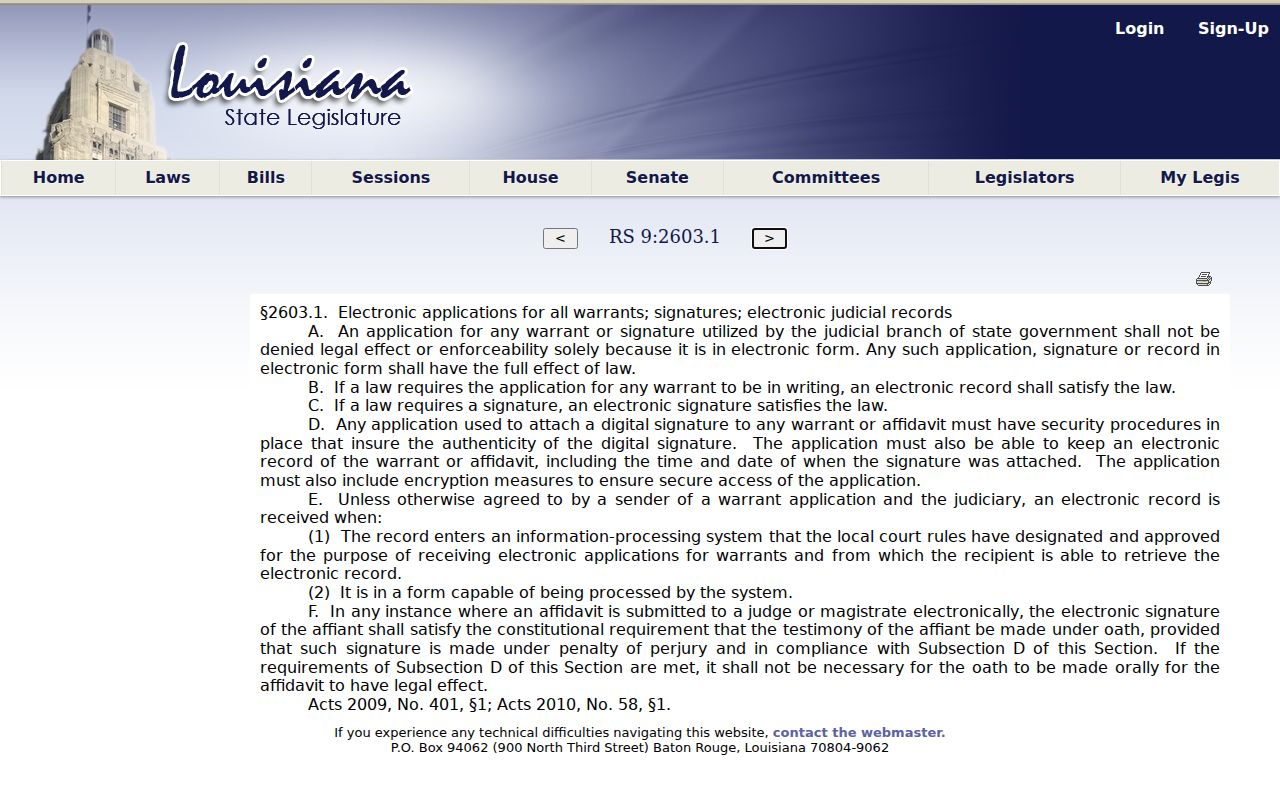
Electronic creation makes a warrant legally usable; it does not create a public statewide name-search index.
Local amnesty and roundup programs are temporary. Confirm dates, eligible cases, payment or appearance terms, and any arrest protection with the issuing court. For reliable proof, obtain the current clerk docket and recall order rather than relying on an old list, screenshot, receipt, or private search result.
A narrow Louisiana warrant request should identify the subject, approximate issue date, alleged charge, issuing court, and any case, citation, or warrant number. Ask for the releasable warrant register entry, issuance or recall event, and current docket status. The custodian does not have to create a new statewide list or explain why a judge acted. When part of the record is protected, the office may withhold or redact that material under the applicable law.
Search results also need careful identity review. Compare full name, aliases, partial birth details, warrant number, charge, court, parish, and issue date. A common-name match or old photograph is not enough. If a docket shows "recalled" or "quashed," verify the signed order and ask whether the sheriff received the update. If it shows "served," read the later appearance and bond entries rather than assuming the criminal case ended.
Louisiana's lower-court structure makes repeated venue checks essential. A district-court search may miss a city traffic failure to appear, municipal ordinance matter, mayor's court attachment, family support order, or justice-court command. Search the court printed on the notice first. If the matter transferred or consolidated, retain both numbers and ask each clerk for the cross-reference. One parish's larger online system does not hold the files of smaller parishes in the same judicial district.
A public warrant profile is also distinct from an arrest record. The warrant reflects a judicial command, while a later booking record shows whether an agency took the person into custody. Service of the warrant may create new bond and appearance entries but does not decide the underlying accusation. To follow the matter through completion, request the charging instrument, chronological minutes, recall or service event, plea, and final disposition from the issuing court.
Search warrants require a different method because they concern a place, item, or account rather than a public wanted-person roster. An affidavit, return, inventory, or related case filing may become available after execution, but sealing and investigation rules can delay or prevent access. Give the issuing court a warrant number, approximate date, agency, and related case number when known. Do not assume that failure to find a person's name means no search warrant existed.