
Louisiana Arrest Records and Charges
An arrest record is created when a Louisiana agency takes a person into custody or issues a qualifying citation. It may show the arresting agency, booking number, intake date, initial alleged offense, bond, housing, and release status. Those are custody facts and agency-supplied allegations. A district attorney controls prosecution for the state and may accept, refuse, amend, divert, sever, consolidate, negotiate, or dismiss counts. A grand jury may return an indictment or no bill.
The court charge record starts when a complaint, bill of information, indictment, or eligible citation enters a court file. The clerk then tracks amendments, arraignment, plea, minutes, and disposition. Booking and custody detail belongs with a sheriff roster, while the full prosecution lives in Louisiana criminal court records. Court charges after arrest may differ sharply from the jail's first description. An arrest, a filed charge, and a conviction are three separate events.
The DPS&C public-information page identifies the official records channel for releasable state corrections material.
Corrections custody information is separate from the sheriff's arrest record and the clerk's filed court charge.
Find Louisiana Arrest Records
Louisiana does not offer one free public system for every arrest and court charge. Start with the sheriff in the arrest parish for a releasable booking sheet, arrest register, bond, and release data. Then use the Louisiana parish directory to reach the district clerk and any city, parish, municipal, traffic, or mayor's court that could hold the filed count. The Louisiana Clerks' Remote Access Authority portal supports participating clerk indices, but coverage, images, age, subscriptions, and charges vary.
- Identify the arresting agency, parish, date, full name, aliases, and booking or item number.
- Request or search the sheriff's booking record for the initial charge and custody facts.
- Search the correct clerk by name, suit number, date range, and court level.
- Compare the newest charging instrument, minute entry, plea, and disposition for every count.
If the case is absent online, contact the clerk at the counter, by mail, or through its records channel. Ask for the bill or indictment, chronological minutes, and certified disposition. The district attorney may provide a final screening or refusal record, but active prosecutive and investigative material can be exempt. Note: A missing online hit does not prove that an arrest never occurred or that a filed charge was expunged.
The Louisiana State Police criminal-records program explains BCII applicant processing, fingerprints, corrections, and authorized checks.
BCII's compiled response still should be reconciled with the parish clerk's current charging instrument and certified disposition.
Louisiana Charging Documents
The charging document shows what the state formally alleges after screening. It controls over jail shorthand. Louisiana also uses citations or summonses for some traffic and misdemeanor cases, which can open a lower-court file without a custodial booking. A minute entry records what the court did and can show whether a charge was accepted, amended, dismissed, or resolved.
The U.S. Attorney for the Eastern District of Louisiana is the official prosecution source for federal charges filed in that district.
Federal charges use federal courts and PACER, not Louisiana parish criminal dockets, even when the arrest occurred within the state.
| Complaint | Information | Indictment | |
|---|---|---|---|
| Source | Sworn facts from officer or affiant | District attorney | Grand jury |
| Purpose | Probable cause, warrant, or lower-court initiation | Formal counts where legally permitted | Formal accusation after grand-jury review |
| Caution | May be sealed during an active matter | Can be amended or superseded | True bill is not a conviction |
Louisiana Court Charge Status
Read status by count and date. "Booked" records custody, not adjudication. "Pending screening" means the prosecutor has not made a final filing choice. "Accepted" or "filed" starts prosecution. An amendment changes the count, statute, or facts, so the newest instrument controls. A refusal means the district attorney declined that charge and differs from an acquittal. A no bill means the grand jury declined indictment. Diversion may pause prosecution and can lead to dismissal after completion.
- Pending
- No final disposition has been entered.
- Amended or reduced
- The prosecutor changed a count; read the newest filing.
- Dismissed
- The count ended without a conviction on that count.
- Nolle prosequi
- The prosecutor formally chose not to proceed at that time.
Louisiana Charges vs Convictions
An arrest and charge record can exist without any conviction. The filed accusation may be refused, dismissed, diverted, amended, or end in acquittal. A conviction exists only after an accepted plea or guilty verdict. Search results should therefore state the actual status and date, not collapse the whole file into a yes-or-no label.
| Charge | Conviction | |
|---|---|---|
| Stage | Accusation | Verdict or plea |
| Burden of Proof | Probable cause | Beyond reasonable doubt |
| Meaning | Allegation remains unproved | Guilt adjudicated by plea or verdict |
Louisiana Sealed vs Expunged Arrests
Sealing limits access under an order or statute. Louisiana expungement removes covered arrest and conviction information from public access without destroying it. Courts, law enforcement, and other authorized entities retain statutory access. Eligibility depends on the offense, outcome, history, sentence completion, waiting period, and exclusions. The person files in the court holding the record and identifies the arrest date, agency, item number, charges, case number, disposition, and each agency to receive notice.
| Sealed | Expunged | |
|---|---|---|
| Public access | Restricted by order or law | Removed from ordinary public access |
| Record | Still exists | Still exists and is not destroyed |
| Agency access | Depends on authority | Retained for entities named by law |
Louisiana Charge Codes and Severity
Louisiana charges often cite a Revised Statute in the form "R.S. 14:xx," while local offenses cite municipal codes. Louisiana does not use one universal class grid for all crimes. A felony is an offense punishable by death or imprisonment at hard labor; other crimes are misdemeanors. The specific statute supplies the penalty range, enhancement, mandatory minimum, fine, and hard-labor exposure.
The U.S. Attorney for the Middle District of Louisiana provides the official federal prosecution channel for its assigned parishes.
A federal indictment must not be mixed with a Louisiana bill of information or a state district-court suit number.
One arrest may produce several counts with different dates, statutes, attempts, degrees, or enhancements. Portal abbreviations such as "F," "M," "attempt," or a degree number are not enough by themselves. Read the filed instrument and the statute effective on the offense date. Felony venue normally points to district court, while misdemeanors can remain in several lower courts. Note: The court named on a citation or charging paper is a better venue clue than the arresting agency's headquarters.
Louisiana State Criminal History
The Louisiana Bureau of Criminal Identification and Information within State Police maintains the fingerprint-linked statewide repository. It assembles arrest and disposition reporting, but it does not replace a clerk-certified charging instrument or disposition. Louisiana is a closed-record state. The Internet Background Check service requires registration and serves recipients authorized under R.S. 15:587. It is not an unrestricted people-search tool.
The internet product is name based and can produce false matches or misses. Fingerprints provide stronger identity resolution and are mandatory where the requesting authority requires them. If a state response shows an arrest without a result, get the certified court outcome and follow BCII's correction process. A sheriff roster is freshest for custody, the parish clerk controls filed charges, and BCII provides the authorized compiled history. Each answers a different question.
The U.S. Attorney for the Western District of Louisiana publishes official information about federal prosecutions in that district.
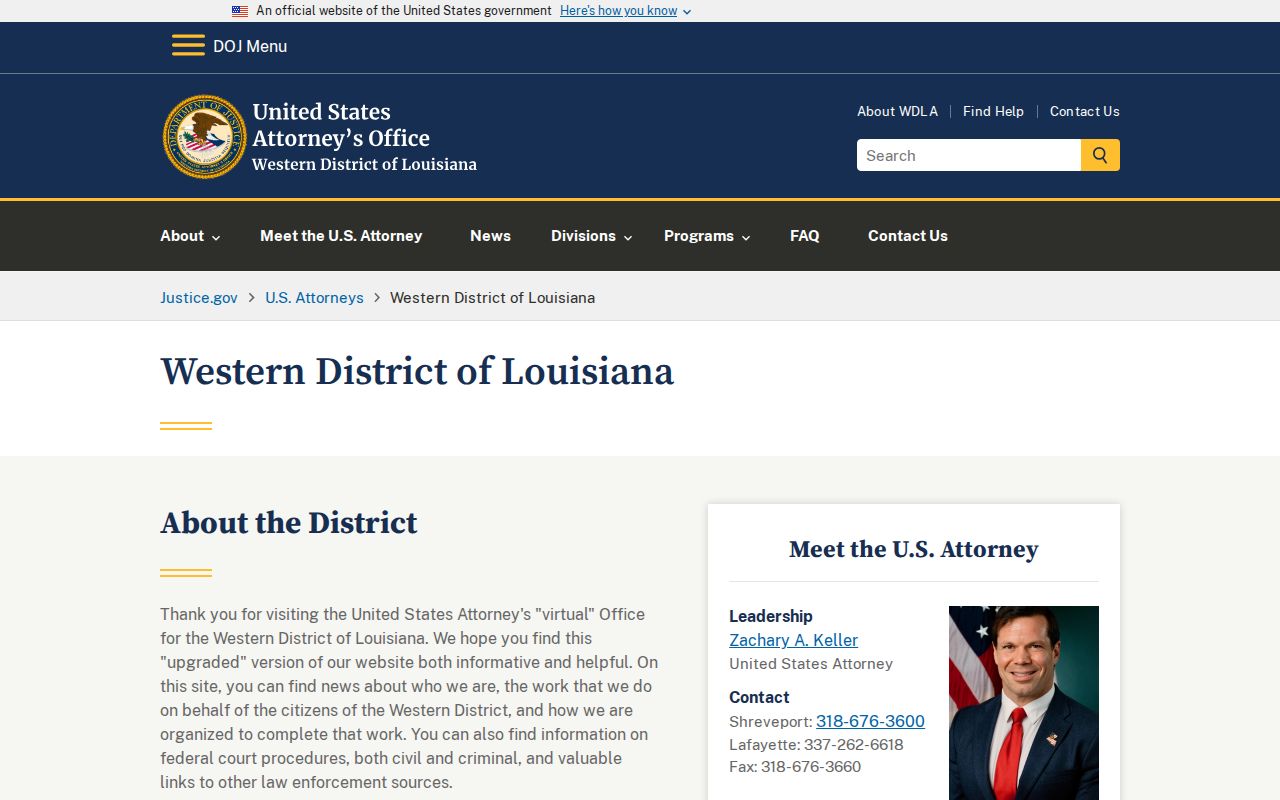
Search federal charges in the appropriate federal docket; a parish clerk cannot certify those federal pleadings or outcomes.
Using Louisiana Arrest Records
A name match is not enough for a high-stakes decision. Compare legal name, aliases, date of birth where lawfully available, arrest date, agency, booking number, and court number. Then read the disposition for every count. Public availability does not authorize stalking, witness intimidation, identity theft, or unlawful discrimination. Consumer reports used for employment, housing, credit, or insurance may trigger federal Fair Credit Reporting Act duties, including permissible-purpose and adverse-action rules.
Important: Louisiana Court Records is not a consumer reporting agency, and its information cannot be used for FCRA-regulated decisions.
Restricted Louisiana Charge Records
Juvenile matters, grand-jury material, protected victim or minor information, active investigative and prosecutive files, sealed affidavits, and expunged records may be unavailable. Louisiana R.S. 44:3 protects defined investigative, prosecutive, intelligence, security, and pending-criminal material. A clerk also masks specified private identifiers. A public-record request cannot bypass a court seal, grand-jury secrecy, or juvenile confidentiality.
For a records fallback, ask the sheriff for the releasable booking sheet, arrest register, bond, and release data. Ask the clerk for the charging instrument and minutes. A narrow request to the district attorney may seek a final screening or disposition record, subject to exemptions. Give names, dates, agency, item or booking number, and case number. The custodian supplies existing records, not a new explanation of why a person was charged.
Identity checks matter because names are not unique. Record the full legal name used at the time, maiden or prior names, aliases, approximate age, arrest date, and parish. A police item number, booking number, citation number, clerk suit number, and state repository identifier point to different systems. Keep the label beside each number and ask the agency to cross-reference it. A single mismatch can lead a searcher to another person's Louisiana arrest record.
Timing can also explain conflicts. The sheriff may publish a booking before prosecutor screening. The clerk may post a docket entry before an image becomes available. A court may sign a dismissal after an old state response was generated, while repository correction waits for disposition reporting. Save the access date, then obtain the newest minutes and signed order. Consequential users should request a current certified disposition rather than repeat a stale portal label.
Louisiana Public Records Law is an inspection and copying law. A requester can ask the proper custodian for an existing record in electronic form and a cost estimate. The custodian may redact protected parts while releasing the balance when law permits. Sealed court records require judicial process, and active investigation exceptions may support withholding. If access is denied, request the legal basis and the name or title of the custodian, then seek legal advice about any remedy or deadline.